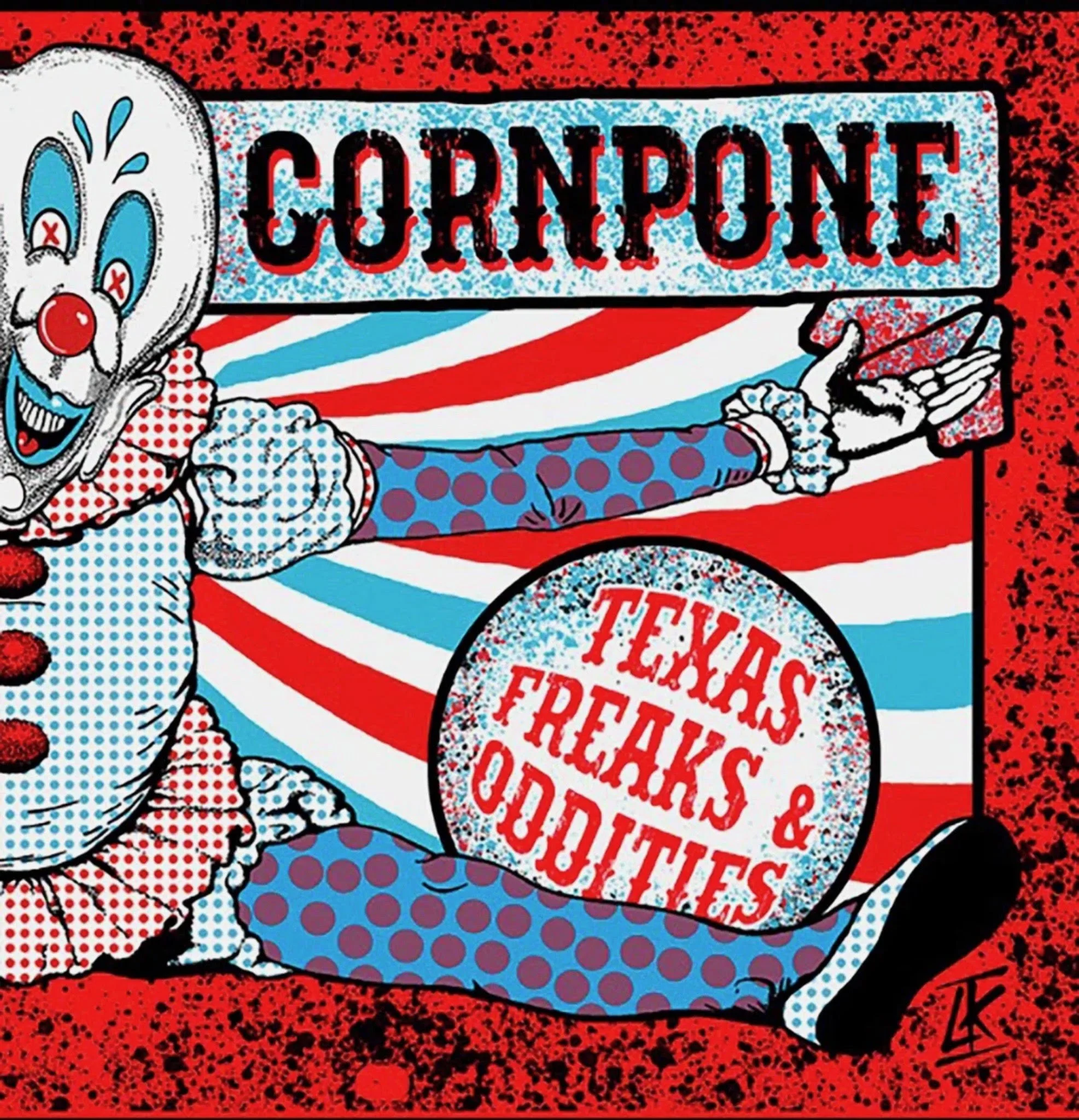
Everything Shattered: The Lost Story of Cornpone
This is Maurice's first band interview, and it's a story thirty years in the making. Nearly thirty years after Texas underground band Cornpone fell apart, their final 1996–97 Sweatbox recordings are finally being finished — and the surviving members tell the story in their own words.
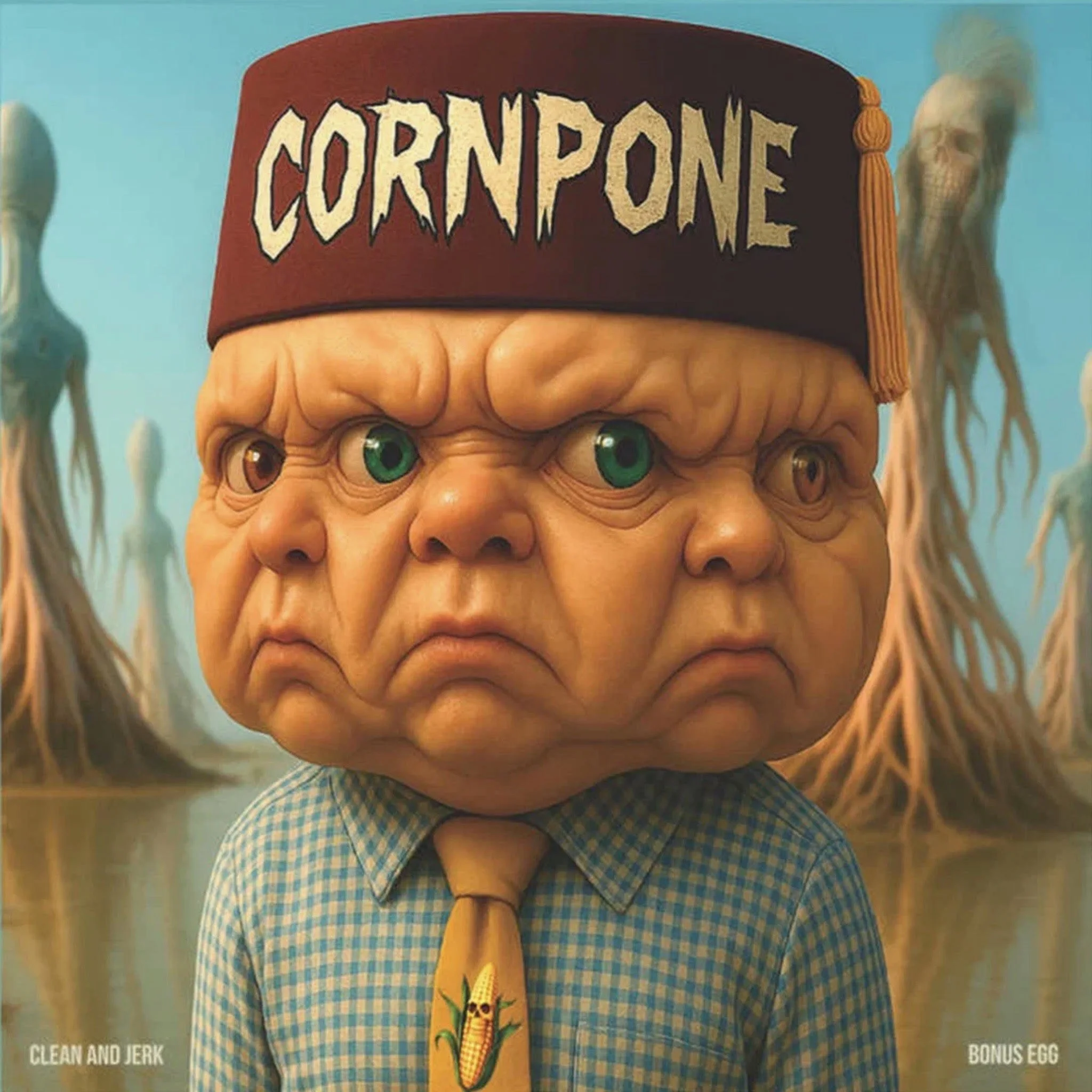
I had never heard of Cornpone when I was first approached about interviewing them.Then I heard the music.
Loud, abrasive, chaotic, and difficult to pin down, Cornpone pulled from punk, hardcore, thrash, and noise rock, along with the strange musical DNA of their native Texas.
The band's story began in the Waco area in the late 1980s, where punk, metal, and skateboarding offered an escape from the intensely conservative environment surrounding them. Eventually they made their way to Austin, where Cornpone built their own strange little universe around a crowded three-bedroom house they called the "Cornpound."
But by 1996 and early 1997, the band was beginning to unravel.
Cornpone entered Austin's Sweatbox studio for what would become their final recording sessions. Only two months later, guitarist David "Spanky" Morrow died.
The band ended. The recordings disappeared.
And somehow, they survived.
They passed through studio fires, changed hands more times than anyone can count, and at one point sat in a box reportedly destined for a dumpster — before eventually making their way back to the band.
Nearly thirty years later, those recordings are finally being completed, with plans for a 21-song double album mixed by Paul Leary of Butthole Surfers, along with a series of split seven-inches featuring friends from the Texas underground.
I spoke with Cornpone's Craig Merritt, Jarred Brown, Coby Cardosa, and Anthony Pedone about growing up outside Waco, finding their place in Austin, the chaos surrounding the band, losing Spanky, and why finishing these recordings became unfinished business that needed to be made right.
This is the story of Cornpone, in their own words.
1. Take me back to the beginning. How did Cornpone form, who was in that original lineup, and what was happening in Austin that made this band possible?
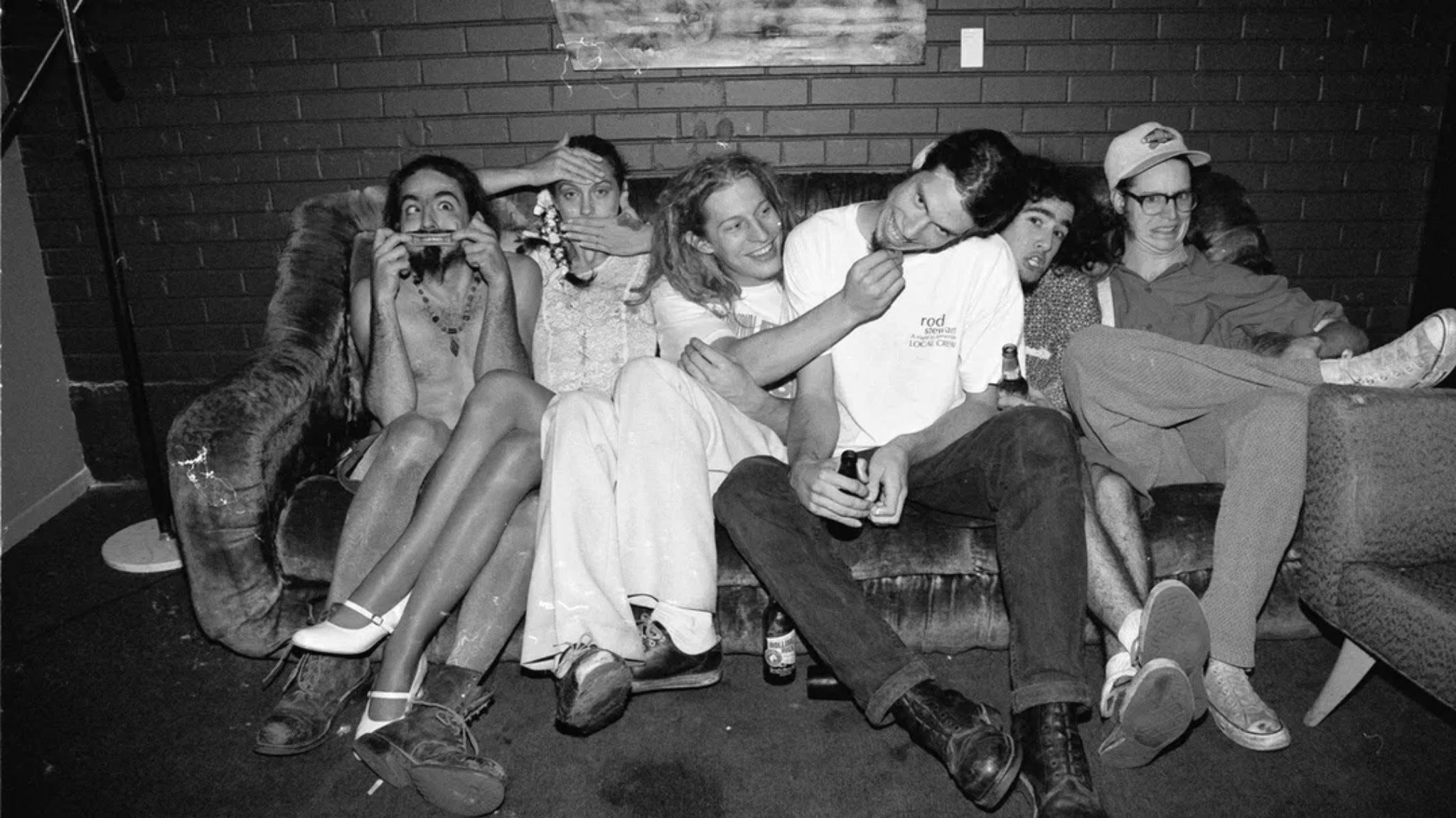
Craig Merritt (bassist, one of two original members — and cousin of drummer Jarred Brown):
Cornpone started as a reaction to the world we were living in growing up in Waco, Texas, essentially.
The original members were: Craig Merritt on bass, Jarred Brown on drums, Dave Wallace on guitar, David "Spanky" Morrow on guitar, and Chris Furrh on vocals.
My cousin Jarred and I shared a love for music and all things subversive and weird that we could get our hands on. Growing up in Waco during that time was a bit like being submerged in a situation like if Over the Edge morphed into the setting of Footloose.
I can't speak for the rest of the band that also served their time in small Texas towns, but for us — me, Jarred, Dave, and Spanky — it was absolute hell for free thinkers and creative types. The overall mood of the town was steeped in heavy religious and conservative values that left no room for a counterculture, or a culture outside of the church. Period.
The only alternatives to the law-and-order gauntlet the church held over the town were a thriving biker and burnout scene, trying to stay just out of reach of the enforcers.
We found solace and a taste of freedom in skateboarding, punk, and metal music. Once we were close enough in age to people that could drive us out of town to see shows, that was the ultimate game changer for us. We had fun against the odds and made our own world and music, and with the help of the bikers and burnouts we were able to source the chemicals we would need to maintain our escape until we could actually legally drive and split to the nearest town that would accept this crazy mess — and Austin had that in spades at the time.
The memories are very fuzzy, but with all the lineup changes that would befall the band in those first years of landing in Austin, we ultimately found the perfect bond and cult-like brotherhood of our own: Anthony replacing Dave Wallace on guitar, adding Coby on second kit and keys, and ultimately Jennie joining too — she and Anthony would take over vocals. That lineup sustained until the untimely death of Spanky.
2. Where did the name Cornpone come from?
Jarred Brown (drummer, original member):
Coming up in Waco, we could only book gigs with speed/death metal bands. We leaned more towards punk and satirical speed metal. When it came time to name the band, we didn't want to go down the same road as the other local bands — i.e., Caustic Death, Rotting Savior, etc.
We were fans of Jubilation T. Cornpone from Li'l Abner, who was a revered Confederate war "hero" that was actually a complete and total failure. It smacked of the cultural backlash in Waco that touted "heritage not hate." We pushed really hard against that garbage by making fun of it through satire. They never knew they were the butt of the joke.
We wanted something antithetical to all of that and wanted to not take ourselves too seriously.
So… we're Cornpone.
3. What bands were you playing with in Austin at the time, and where did Cornpone fit — or not fit — within that scene?
Jarred Brown:
Moving to Austin from a small town outside of Waco with a bare minimum of friends and musical connections was very daunting. We had been traveling to Austin and gigging most weekends for some time but had never quite found our footing in the scene. We were also really fucking weird and (from what others have told me) intimidating.
We kind of set up our own universe at the "Cornpound" — a three-bedroom house that we managed to fit eight, and sometimes more, people into. It was an incubator for all things strange and a wellspring of creativity. We never closed. Some hardly even slept. We were up to something 24/7, and we didn't really interact with the outside world other than shows and shitty day jobs.
I think this insulation and lack of influence allowed us the freedom to be very unique and innovative. The original "Waco 3" were all self-taught, and we were constantly working on our chops. By the time Anthony and Coby entered the picture, we had improved enough to hold our own against their musically trained background. Locally, we started to gain some credibility — sometimes for good and sometimes otherwise. When Jennie joined us, it was an absolute fucking circus!
Anthony Pedone (vocals/guitar):
We played a lot of our better shows with Crust. They were from Waco (like Cornpone) and they were on the holy grail of indie labels, Trance Syndicate. Richard, the drummer from Crust, recorded Cornpone's first demo with the original lineup, and Crust's love and support for us continued after the band moved to Austin. We played with Fuckemos, Pocket Fishermen, Sangre Del Toro, Zero Skills, Motards, and Pretty Mouth, and a hundred other bands at clubs like Electric Lounge, Cavity, Blue Flamingo, Backroom, and Emo's. We fit in more than we probably knew at the time, but I think we always felt a bit of an outsider vibe because we were transplants from small towns where we were definite outsiders, and that kind of carried over to the city when we moved from our respective, repressive origin cities. Over time that faded as we gained momentum and started to mix in with other bands and gained acceptance.
4. What were some of the musical influences that helped shape Cornpone's sound?
Anthony Pedone:
I think for all of us there was a love for Texas music — Butthole Surfers, Scratch Acid, Poison 13, Big Boys, Cramps, Offenders, Hickoids, etc. — which is what drew us to Austin in the first place. But we were also all influenced heavily by '80s thrash metal, punk, and HC stuff that the local Camelot or Hastings music stores might carry before we all made it to Austin. Once we got to Austin in 1990/91, "grunge" was king and the noise rock scene was beginning to develop in response to that, I suppose. And when we recorded in '96, lots of Melvins, Big Black, Jesus Lizard, Dwarves, Antiseen, and New Bomb Turks were spinning on the turntables — along with old trucker and country music like Dave Dudley, Red Sovine, Louvin Brothers, Willie, Waylon, Coe, Haggard, and Cash.
5. How would you describe Cornpone's sound to somebody encountering those recordings for the first time?
Anthony Pedone:
There were many colorful responses to this question back in the '90s because this was the obligatory question asked by all clubs… I will not speak or type them now because they haven't aged well and are completely crass and inappropriate, and we make some loose references to this kind of question in our song "Hernia."
That being said, it's a mix of all of our collective influences and flavors. It's the result of what happens when you combine three country punk weirdos from Waco, stir in two parts music theory, multi-instrumentalist thrasher nerds from Victoria, Texas, and one dash of a runaway, agro girl from Frogville, Oklahoma who lived under the stairs of the Cavity Club. You take that and dump a bunch of biker chemicals and booze in a blender, hit the high blend button, and throw it against the wall.
6. The recordings being released now came from Cornpone's final sessions at Sweatbox in 1996 and early 1997. What do you remember about those sessions, and how did the recordings end up remaining unheard for nearly thirty years?
Coby Cardosa (drummer 2):
If I remember correctly, shortly after the Sweatbox recordings, we had to move out of the Cornpone house. Everybody split up and went different ways, and that was kind of the beginning of the end, of sorts. Spanky and I shared the same birthday, so there was this weird connection that we had. In fact, we had our own little side project, just as a duo — him on bass guitar and me on drums — and we had an apartment together. I think everybody just kind of started losing touch, and Spanky went off the deep end after he moved in with Chris Gates. When he passed away, everything just shut down. Recordings got shelved. And then, they were literally in a couple of studio fires, somehow ended up in a dumpster, somehow ended up in Ryan Stepchild's hands, somehow ended up in Anthony's hands. And here we are today.
Anthony Pedone:
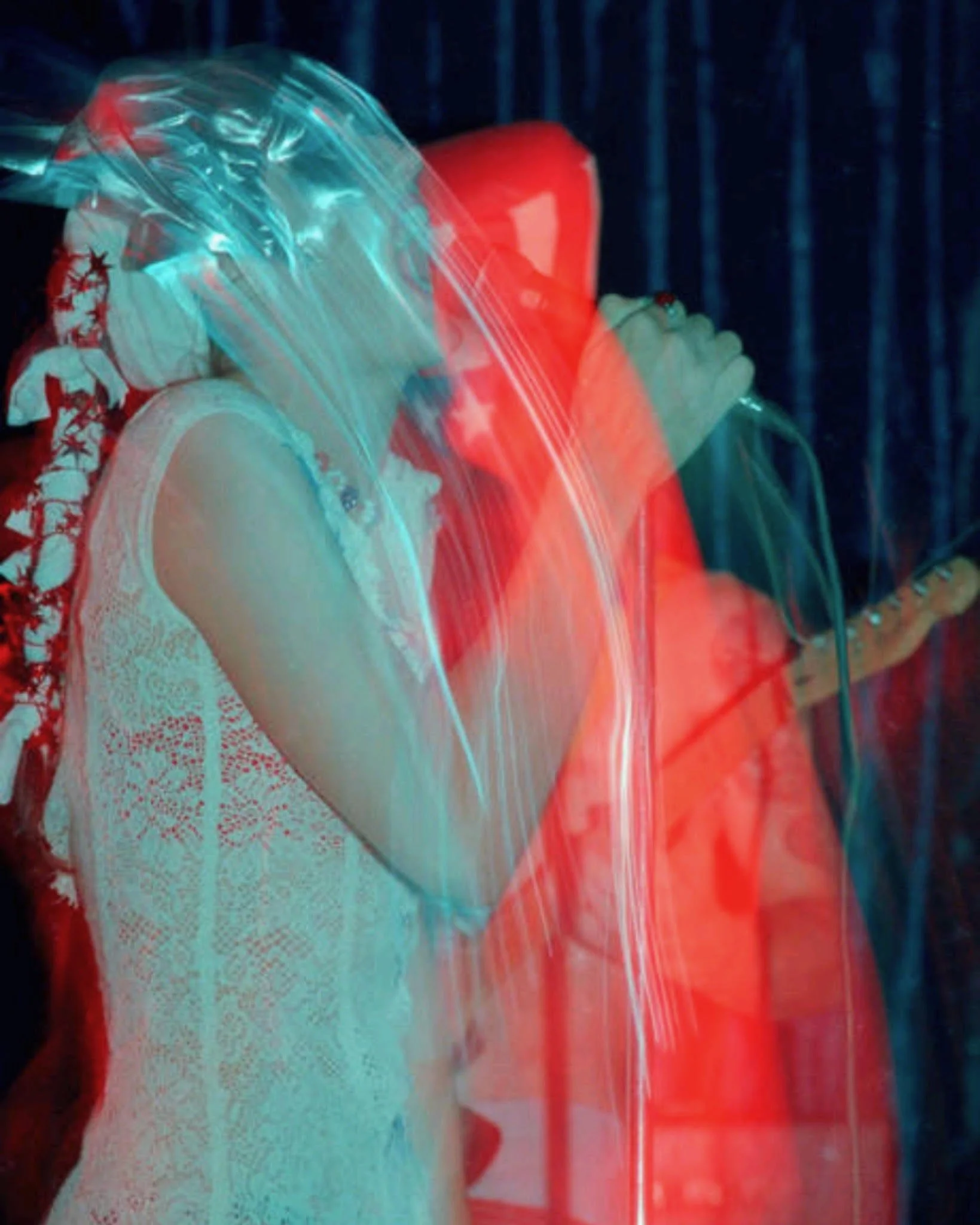
I remember being really nervous about how the songs would translate to tape. We were loud, sloppy, uncaring, and brash. Sometimes that doesn't work when you have to strip all that away and just play the songs. I knew live we had it together, and a large part of our thing was our ridiculous behavior and outlandish masks and '70s polyester clothing and stage presence… I was worried about when all that was taken away, what would be left in just the music.
I was drunk and high and really struggling with the role of being the singer. I was never going to be a singer. I joined the band as a guitarist and swapped keyboard duties with Coby when he hopped on the second kit. I ended up replacing our old singer, and I was happy to have Jennie to back me up. She was a real talent and was everything a woman singer could be. She had a great stage presence and energy, but neither of us had ever sung for a band.
The rest of the band didn't have the same issues I was having (a minor identity crisis, I'd say). I played very little guitar on the recordings, and so I felt very vulnerable. Memories are very fuzzy around that time because we were really at our worst addiction-wise, but our best musically — and that's what I remember the most: that Coby and Jarred's drums were killer, and Craig and Spanky really were laying it down and putting all of their heart into these songs and this recording. It was a do-or-die moment, and they had really been through the shit to get to this point.
Unfortunately, all that energy and rage and fight-to-the-death passion was ultimately forced back into the pressure cooker, because Spanky passed away two months after the recording — and that was just a bridge too far. Everything shattered. We all went our separate ways because there was no replacing Spanky. We were brothers, and the family fell apart without him.
Many years later, a good friend of the band and fellow Victoria, TX boy Ryan Stepchild recovered our second session from a box destined for the dumpster after the second Sweatbox studio fire that destroyed our practice space and the studio. I received the masters in 2016 and didn't have the resources or energy to open it all up again. It wasn't until 2025 that we got serious about releasing them. After we started mixing, Craig tuned up the original session we did in 1996 on ADAT, and Cris Burns from Pocket Fishermen transferred them to .wav files, and we added them to the pile of stuff for Paul Leary to mix.
7. The description accompanying these releases says Cornpone may have been simultaneously at its "best and worst" — musically tight and electric while personally beginning to unravel. Does that feel accurate from where you stand today?
Anthony Pedone:
Totally accurate. The majority of us had all kind of gotten as far away from the center of health as possible and had let the chemicals take over. Jarred and Coby were the more responsible ones, but the other four of us had really let it take ahold. My main job was peddling said substances, which were available in copious amounts in the household, and I carry a lot of regret for the destruction that enterprise reaped on us as a group and as friends. But ironically, those same substances were influencing the speed and energy of the performances, which were pretty epic by our incredibly low social standards.
8. Why bring them out now, and how did the idea of pairing Cornpone with different Austin bands on a series of split 7-inches happen?
Anthony Pedone:
I had some resources from some other film projects I had been doing, and I wanted to honor the songs and Spanky specifically. After his sudden passing, I had promised his mom — if she gave me his pawn slip for his gear that he had pawned before he passed — that I would sell it and release the record. I sold it and didn't live up to my end of the deal, getting high instead. This was like spring of 1997. Jennie and I had a child, and then I went to prison for fraud. When I was in prison (2000–2006), releasing the record was one of the things on my list of things I needed to fix. It took a long time to get there, but I think it happened at the best time it could have. I'm not sure we would have had the support that we were able to muster now.
As for the splits: back in the day, bands did split 7" releases all the time, and I wanted to see if making this record was even worth mass pressing — or if I should just mix and press a small run for us personally and not bother making it available in a wider release. So I thought the best way would be to reach out to some friends that were still playing and see if 7" splits were something they wanted to participate in. Everyone we reached out to actually remembered us, and three of the five or six bands we reached out to agreed. I was shocked and pleased.
So we went to work on those and focused on making them as collectible and cool-looking as possible. It started to grow exponentially from there, and now it has developed not only into these three 7" splits — with Suckling, Pocket Fishermen, and Ed Hall — but now a 21-song double LP mixed by Paul Leary and featuring so many other great friends and musicians: Chris Gates (Big Boys, Poison 13), Brett Bradford (Scratch Acid), Paul Leary (Butthole Surfers), Scott Biram, Bobby Langraf (Honkey, COC), Aileen Adler, the entire Pocket Fishermen crew (Cris Burns, Jason Craig, Brant Bingamon, and Lance Farley), and Gary Chester (Melvins, Ed Hall). The list is still growing as we are nearing the end of the mixing process.
More 7" to come. We have a split 7" lined up with Wesley Willis. There's a whole unreleased album of his that Ron English has rights to of Wesley's, and so we are putting something together with him — and we are trying to get something going with other old bands from Austin.
9. What ultimately happened to Cornpone?
Anthony Pedone:
Cornpone went out like a light after Spanky died. We didn't have the tools to process that loss. So many people were dying and bands were disappearing from the scene, and the idea of trying to put it all back together was not in us. Spanky had become one of the driving forces of the band and was a major contributor of both music and lyrics at this point — but mostly, the core unit from Waco was broken and beyond repair.
We had created this world of our own and wrapped ourselves in this version of ourselves that protected us from the reality of the pain and destruction we were self-imposing, and his death exploded that silo and exposed all the weakness and sadness we had been bottling up, and left us with this unchangeable outcome.
10. If someone has never heard Cornpone before and you could hand them one record or play them one song, where should they start?
Anthony Pedone:
The songs that really stick out in my mind are "Stinky" or "Too." "Stinky" was the first song we wrote with the new lineup. It came about at 3 a.m. with me and Coby and old singer Chris in the garage of the house eight people shared. The song didn't change much from that night except to get faster (and stinkier). The song "Too" sprung from nothing at practice one night and was a complete improv song that I feel really captures the polluted, underground wellspring of creativity and trash that was inside us all. "Ladies Room Horror Story" is probably our biggest departure from our usual style and was a real collaborative effort, with several of us contributing lyrics and music. "Mother's Cough" is also one that featured a lot of member collaboration across the board.
The Releases
The Cornpone vault is finally opening. At the center of it all is a 21-song double LP mixed by Paul Leary (Butthole Surfers), assembled from the 1996–97 Sweatbox sessions and featuring a small army of friends from the Texas underground — including Chris Gates (Big Boys, Poison 13), Brett Bradford (Scratch Acid), Scott Biram, Bobby Langraf (Honkey, COC), Aileen Adler, the entire Pocket Fishermen crew, and Gary Chester (Melvins, Ed Hall).
Alongside the LP come a series of split 7-inches pairing Cornpone with old Austin allies: Suckling, Pocket Fishermen, and Ed Hall. More splits are in the works, including one built around a previously unreleased Wesley Willis album that Ron English holds the rights to. Keep an eye on this space — the list of collaborators is still growing as the mixing wraps up.